Marilyn Monroe’s Personally Owned Copy of Oh Careless Love
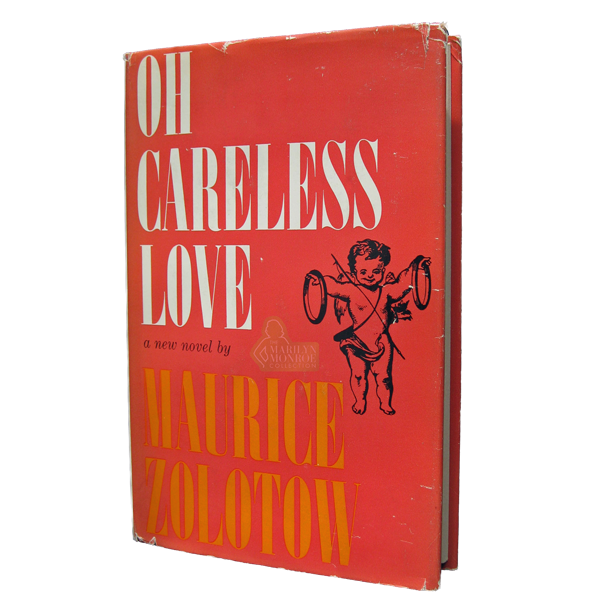
A copy of Oh Careless Love by Maurice Zolotow from the personal library of Marilyn Monroe.
Oh Careless Love is a reflective and unsentimental examination of romantic illusion, emotional vulnerability, and the often painful distance between idealized love and lived reality. Through a blend of observation and social commentary, Zolotow explores how desire, insecurity, and longing shape human relationships, themes that closely parallel many of the emotional and psychological struggles Marilyn openly confronted throughout her life.
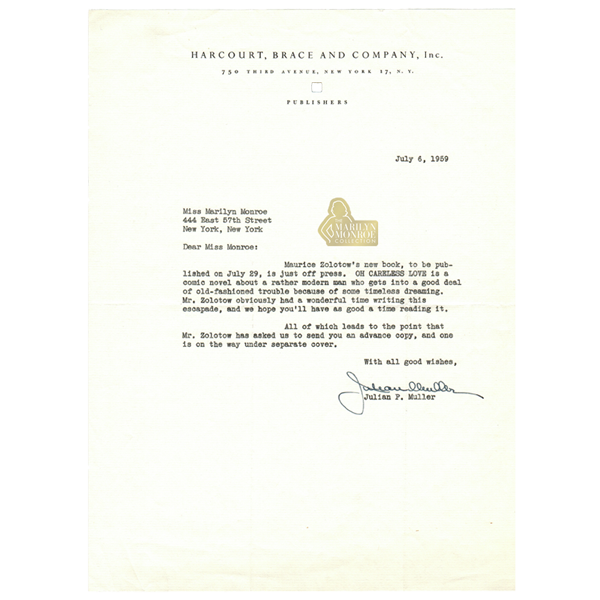
This volume holds special significance, as it is the copy Maurice Zolotow arranged to have sent directly to Marilyn Monroe. A publisher’s letter shown below verifies his request, and the document is preserved as part of The Marilyn Monroe Collection.
Zolotow occupies a unique and authoritative position in the literature surrounding Marilyn Monroe. In 1960, he published Marilyn Monroe, a biography drawn from a series of extended, candid interviews conducted with Marilyn in 1955. Those conversations provided Zolotow with direct access to her private thoughts, ambitions, and doubts at a formative moment in her career.
“In one sense, then, her life is completed, because her spirit is formed and has achieved itself. No matter what unpredictable events may be in her future, they cannot change who she is and what she has become.”
-Maurice Zolotow, 1960
The enduring importance of that biography has been widely acknowledged. As noted in Marilyn Unabridged, Zolotow’s Marilyn Monroe stands “at the head of the pack,” remaining the foundational source for nearly every serious post-1960 account of her life. While many later biographies followed, few matched the credibility, restraint, and firsthand authority of Zolotow’s work.
In addition to his writing on Marilyn, Zolotow was a respected biographer of figures such as Billy Wilder and John Wayne, further establishing his reputation as a perceptive chronicler of complex public figures.
Preserved as part of Marilyn Monroe’s personal library, this book represents more than a shared literary interest. It reflects an intellectual exchange between subject and author, and offers rare insight into Marilyn’s engagement with writers who sought to understand her inner life beyond the public image.
The Library of Marilyn Monroe
Marilyn Monroe’s personal library comprised more than 400 volumes spanning an extraordinary range of subjects, a testament to both her intelligence and her deeply curious nature. For those who truly know Monroe, this breadth comes as no surprise. These were the books of a serious and inquisitive reader. Literature, art, drama, biography, poetry, politics, history, theology, philosophy, and psychology lined the shelves of her home.
Among the first editions were her own copies of defining twentieth-century works, including Jack Kerouac’s On the Road, Ralph Ellison’s Invisible Man, and William Styron’s This House on Fire. From Tolstoy to Twain, her library embraced the great voices of world literature, with titles such as The Great Gatsby, Alice’s Adventures in Wonderland, James Joyce’s Dubliners, Ernest Hemingway’s The Sun Also Rises, and Albert Camus’s The Fall. Alongside these classics were books on gardening, multiple Bibles, and beloved children’s stories, including her personal copy of The Little Engine That Could.
The volumes in Monroe’s library remained in their original bindings, most commonly cloth or paper wrappers, and were preserved in good condition. Many retain intimate traces of her engagement with the text, including pencil markings, annotations, inserted bookmarks, and loose slips of paper.
Every book sold from Marilyn Monroe’s library at the landmark 1999 Christie’s auction bears a posthumous bookplate identifying its provenance. Proceeds from the sale benefited Literacy Partners, extending Monroe’s lifelong commitment to reading and self-education beyond her own lifetime.
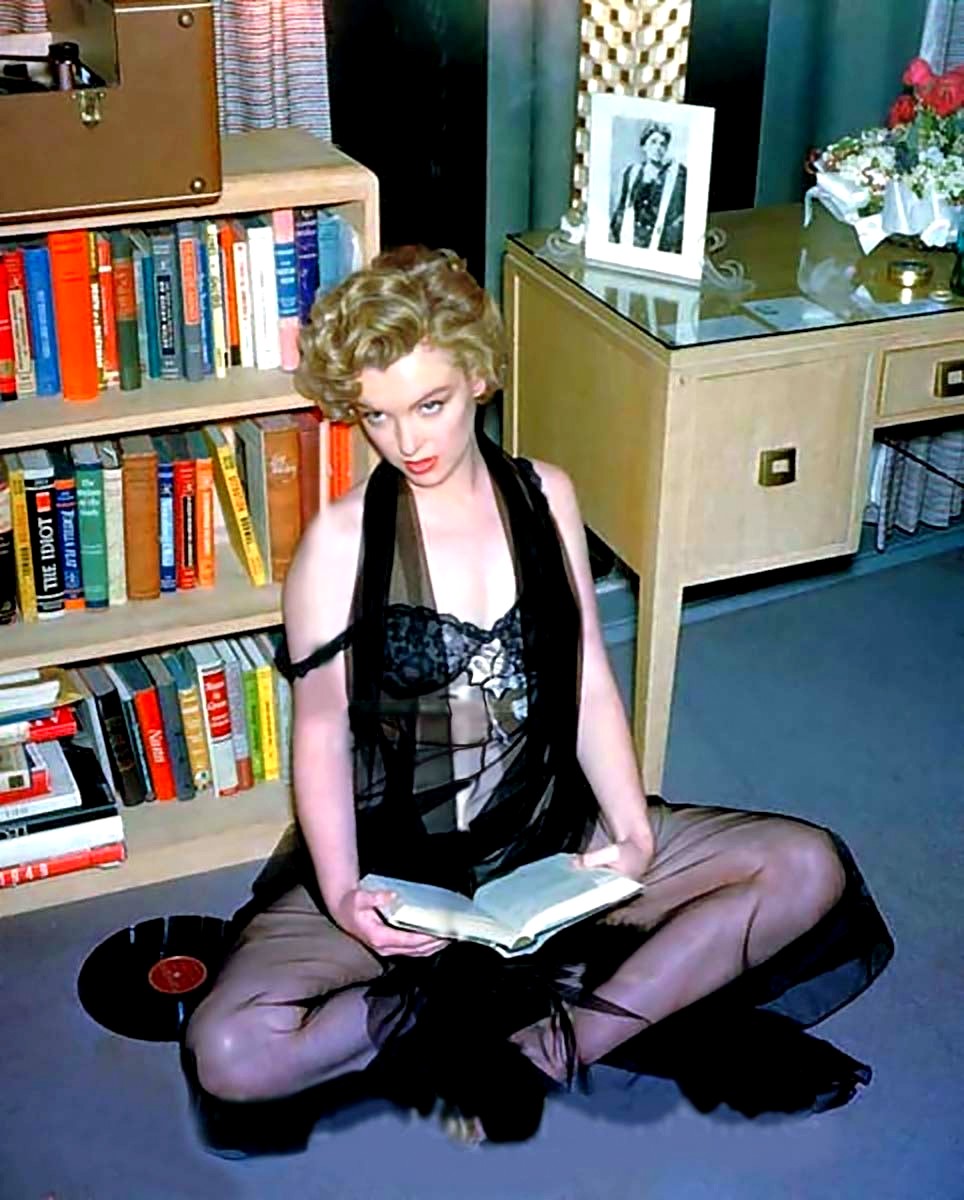
The Personal Property of Marilyn Monroe
October 1999
Collector’s Note
This volume is notable on two counts. First, it belonged to Marilyn Monroe. Second, it was sent to her directly by its author, Maurice Zolotow, a fact confirmed by the accompanying publisher’s letter preserved within the collection.
Zolotow is a significant figure in Monroe scholarship. His 1960 biography, drawn from extended interviews conducted with Monroe in 1955, remains among the most credible firsthand accounts of her life. That relationship between subject and author gives this book a provenance that goes beyond ownership. It documents a specific act of transmission: a writer sending his work to a woman he had interviewed at length and written about publicly.
The book and its documentation together constitute a complete record of that exchange. As an artifact, it is evidence of Monroe’s engagement with writers who took her seriously as a subject, and of her own engagement with the literature of her time.

Scott Fortner
Marilyn Monroe Collection
Founder & Owner

@mariylnmonroecollection 

TheMarilynMonroeCollection