
Marilyn Monroe’s Personally Owned Copy of Man’s Supreme Inheritance
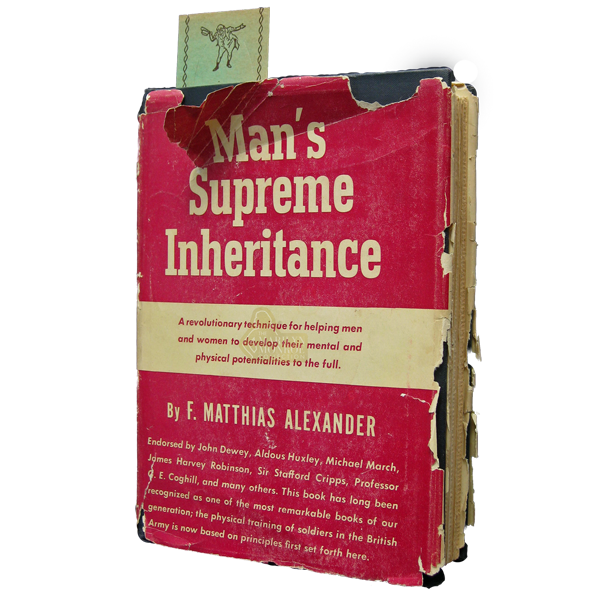
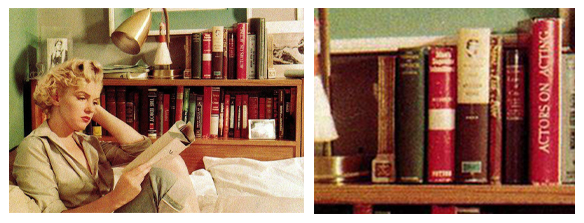
A copy of Man’s Supreme Inheritance by F. Matthias Alexander from the personal library of Marilyn Monroe, photographed with Marilyn in her Beverly Carlton Hotel studio apartment.
This volume offers an intimate view into Marilyn Monroe’s intellectual life, containing numerous underlined passages and handwritten annotations throughout the first 157 pages. Particularly notable is her engagement with Alexander’s exploration of self-awareness and personal reform, including the passage she marked:
“…in both instances all depends on the point of view, we cannot be surprised that the mere promise to reform is usually futile, and we must furthermore realize that a changed point of view is the royal road to reformation.”
A bookmark from Pickwick Book Shop, visible in period photographs taken inside Marilyn’s Beverly Carlton apartment, remains placed at page 157. No annotations appear beyond this point, while a second bookmark continues to mark page 95. Together, these physical traces document the precise moment at which Marilyn paused her reading, preserving a remarkably personal record of her engagement with the text.
The Library of Marilyn Monroe
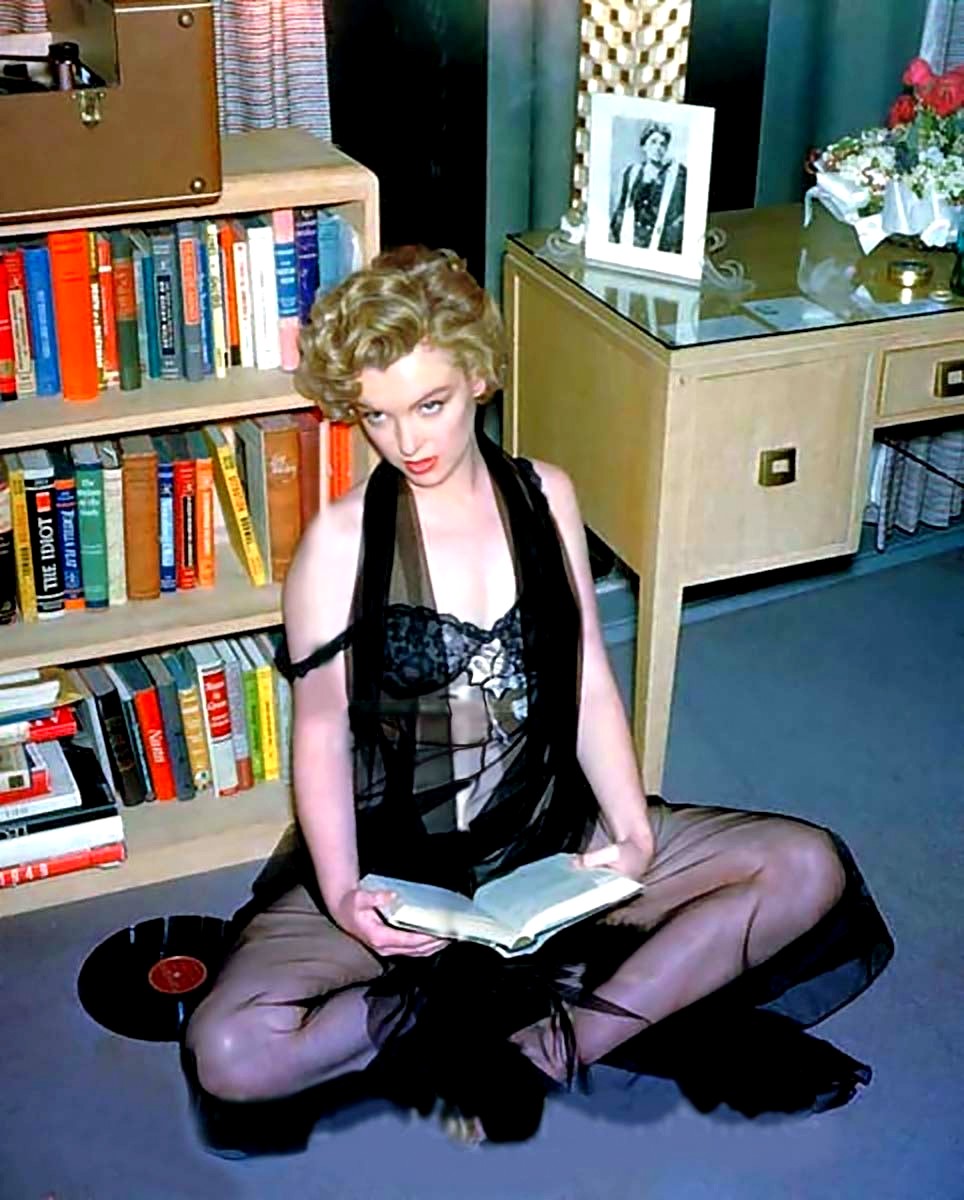
Marilyn Monroe’s personal library comprised more than 400 volumes spanning an extraordinary range of subjects, a testament to both her intelligence and her deeply curious nature. For those who truly know Monroe, this breadth comes as no surprise. These were the books of a serious and inquisitive reader. Literature, art, drama, biography, poetry, politics, history, theology, philosophy, and psychology lined the shelves of her home.
Among the first editions were her own copies of defining twentieth-century works, including Jack Kerouac’s On the Road, Ralph Ellison’s Invisible Man, and William Styron’s This House on Fire. From Tolstoy to Twain, her library embraced the great voices of world literature, with titles such as The Great Gatsby, Alice’s Adventures in Wonderland, James Joyce’s Dubliners, Ernest Hemingway’s The Sun Also Rises, and Albert Camus’s The Fall. Alongside these classics were books on gardening, multiple Bibles, and beloved children’s stories, including her personal copy of The Little Engine That Could.
The volumes in Monroe’s library remained in their original bindings, most commonly cloth or paper wrappers, and were preserved in good condition. Many retain intimate traces of her engagement with the text, including pencil markings, annotations, inserted bookmarks, and loose slips of paper.
Every book sold from Marilyn Monroe’s library at the landmark 1999 Christie’s auction bears a posthumous bookplate identifying its provenance. Proceeds from the sale benefited Literacy Partners, extending Monroe’s lifelong commitment to reading and self-education beyond her own lifetime.
The Personal Property of Marilyn Monroe
October 1999
Collector’s Note
To own a book from Marilyn Monroe’s personal library is to hold evidence of her inner life. Reading was not a pastime for Marilyn but a discipline and a form of self-education she pursued with intention. She built a remarkably large and diverse library, turning to books as tools for growth, understanding, and self-improvement.
Her volumes were not kept at a distance. They were read, marked, underlined, and lived with. Pencil notes, dog-eared pages, and inserted slips of paper reveal an active and searching mind, one constantly working to better itself. These books mattered to her, and she returned to them repeatedly, often in moments of quiet reflection away from the public gaze.
To preserve and collect Marilyn’s books is to safeguard a deeply personal record of her intellectual curiosity and determination to grow beyond the limits imposed upon her. They remind us that behind the image was a woman who believed in learning, in striving, and in becoming more than she was told she could be.

Scott Fortner
Marilyn Monroe Collection
Founder & Owner

@mariylnmonroecollection 

TheMarilynMonroeCollection