
Marilyn Monroe’s Childhood Copy of A Pictorial History of the Movies
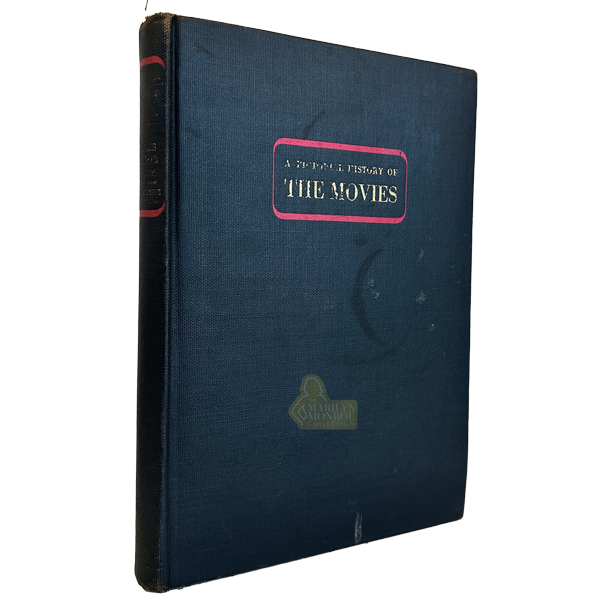
A copy of A Pictorial History of The Movies from the personal library of Marilyn Monroe, acquired during her youth and published in 1943 when she was just seventeen years old. By this time, Marilyn was already married to James Dougherty and living under her married name, Norma Jeane Dougherty. Notably, this book was published three years before she signed her first film contract with 20th Century Fox, perhaps contributing to the creation of the Marilyn Monroe identity.
This substantial volume comprises more than 350 pages of photographs and detailed text chronicling the evolution of motion pictures from their earliest beginnings through the early sound era. The chapters trace the development of filmmaking from its birth and infancy in the late nineteenth century through the revolutionary transition to talking pictures, offering a comprehensive visual and historical record of cinema up to 1941.
The book’s chapter subjects include the silent era foundations, the rise of narrative filmmaking under D W Griffith, the rapid expansion of the industry during the 1920s, and the profound transformation brought about by sound. For a young Marilyn, not far from her own screen career, this book served as both education and inspiration, grounding her understanding of cinema in its history, craft, and evolving artistry.
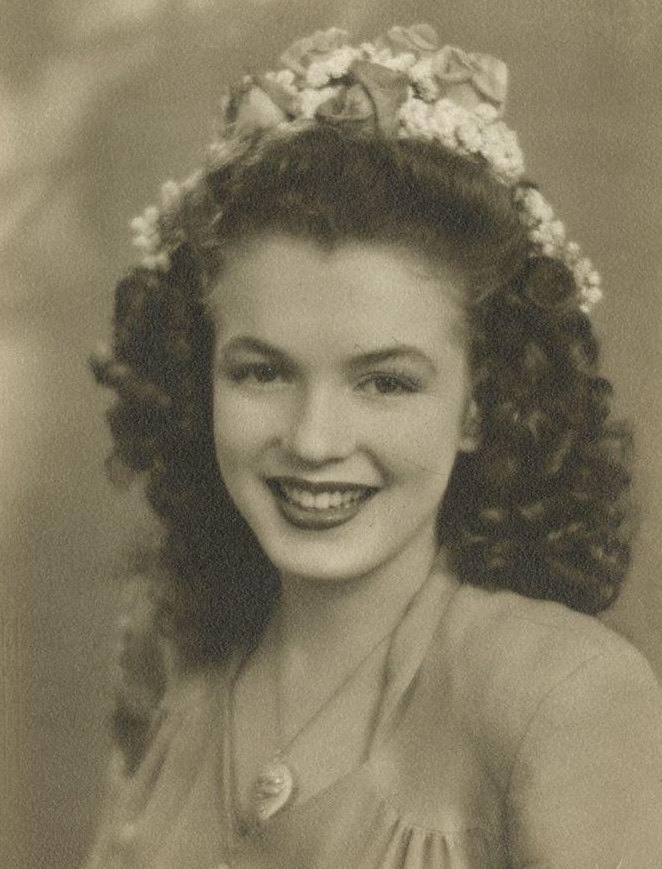
Marilyn at 17, still Norma Jeane.
When considered alongside Marilyn’s Album of Film Stars, also owned from an early age, this volume provides meaningful insight into her formative interest in films and screen personalities. The book prominently features many of the figures she admired most, including Clark Gable and Jean Harlow, both of whom would later hold deep personal and professional significance in her life.
From Marilyn Monroe’s Personal Trunk Packed In 1961
This book is part of several personal items Marilyn Monroe placed into her trunk during her final visit to the Monroe Miller farm in Roxbury, Connecticut, in the summer of 1961, following her divorce from Arthur Miller.
Accompanied by Ralph Roberts and her half sister Berniece Miracle, Marilyn gathered deeply personal possessions that Roberts later described as containing “her past.” These objects, ranging from childhood keepsakes to books and personal archives, were carefully preserved by Marilyn at a moment of profound transition in her life.
From the memoirs of Ralph Roberts:
July 12, 1961
MM wanted one last trip to Roxbury to pick up various items, mainly kitchen stuff. Things she gave me included an aluminum orange squeezer, percolator, etc.
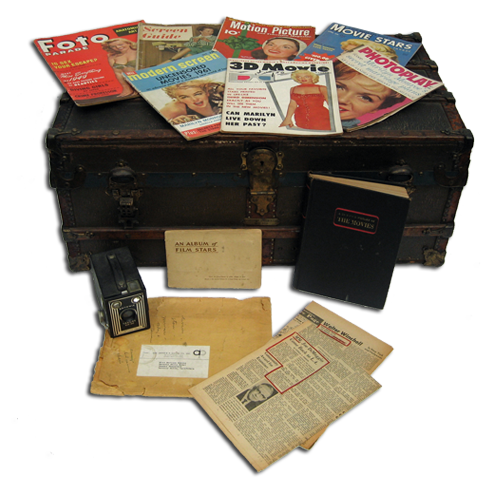
Also a footlocker of odds and ends from as she said “her past.” This footlocker contained various things – a Brownie from her Aunt Ana “only it’s black.” She had discussed with Richard Avedon his taking a picture of her taking a picture of him with it. He thought it an idea, but they never got around to it.
Each item from the trunk represents not only an individual artifact, but part of a larger historical narrative. Together, they form one of the most intimate surviving records of Marilyn Monroe’s personal history. Several artifacts from that trip are part of The Marilyn Monroe Collection today:
- Marilyn’s first Kodak Brownie camera
- Marilyn’s personal film and gossip magazine collection
- Marilyn’s childhood Album of Film Stars
- Marilyn Monroe’s Personal Newspaper Clippings
Note that Marilyn’s trunk itself is also part of The Marilyn Monroe Collection. Click here.
The 1995 Christie’s Auction
Among the First Marilyn Monroe Artifacts Ever Offered to the Public
Marilyn Monroe’s trunk and its contents hold an important place not only in her personal history, but in the history of Marilyn Monroe artifact preservation and collecting.
In 1995, the trunk and its contents were offered at auction by Christie’s East. This sale occurred four years before the landmark 1999 Christie’s auction, The Personal Property of Marilyn Monroe, which would later bring global attention to her personal belongings and establish the modern market for Marilyn Monroe artifacts.
At the time of the 1995 auction, very few authenticated personal possessions belonging directly to Marilyn Monroe had ever been made available to the public. The offering of her trunk and its contents represented one of the earliest opportunities for collectors, historians, and institutions to acquire objects that Marilyn Monroe had personally owned, used, and preserved.
Unlike later auctions, which included wardrobe, jewelry, and studio related material, the trunk contained deeply personal items that Marilyn herself had deliberately gathered and kept. These were not objects selected by studios, agents, or estate administrators. They were objects Marilyn chose to save.
The trunk and its contents offered a rare and intimate glimpse into Marilyn Monroe’s private life, containing childhood possessions, books, personal archives, and keepsakes that had accompanied her across decades.
Their appearance at Christie’s in 1995 marked the beginning of the modern era of Marilyn Monroe collecting.
Today, these artifacts stand among the earliest Marilyn Monroe personal effects ever to enter the public record through auction, predating the historic 1999 Christie’s sale that would later define her global auction legacy.
Film and Television Memorabilia Auction
December 18, 1995
Collector’s Note
What makes this book extraordinary is not simply that it belonged to Marilyn Monroe, but when it belonged to her. Long before she was cast, contracted, or even imagined as a Hollywood star, Marilyn was already studying the movies. As a young woman, she was reading about film history, learning the names, faces, and stories of the people who shaped the medium she would one day transform herself.
A Pictorial History of The Movies reveals a curiosity that predates fame. It shows that Marilyn’s relationship with cinema was not accidental or superficial. She was drawn to films as an art form and as a world of possibility while still on the outside looking in. These pages document her early fascination with storytelling, celebrity, and the evolving language of motion pictures.
To encounter a book like this in Marilyn’s library is to witness the beginnings of a dream. Before the cameras, before the contracts, before the name Marilyn Monroe existed, there was a young woman actively learning about the movies and imagining her place among them. This volume stands as quiet proof that her future did not arrive by chance. She was already preparing for it.

Scott Fortner
Marilyn Monroe Collection
Founder & Owner

@mariylnmonroecollection 

TheMarilynMonroeCollection