
Marilyn Monroe’s Personal Travel Trunk
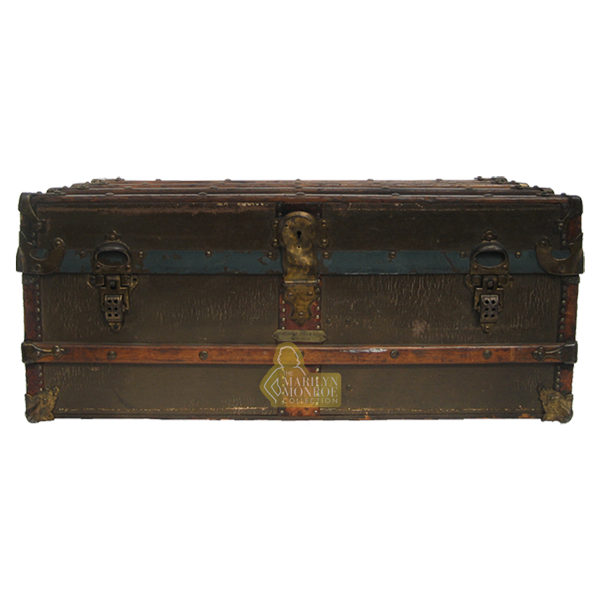
A Marshall Field & Company wooden trunk, measuring 18″ x 12.5″ by 30″, with original leather handles, metal locks and brackets, owned by Marilyn Monroe.
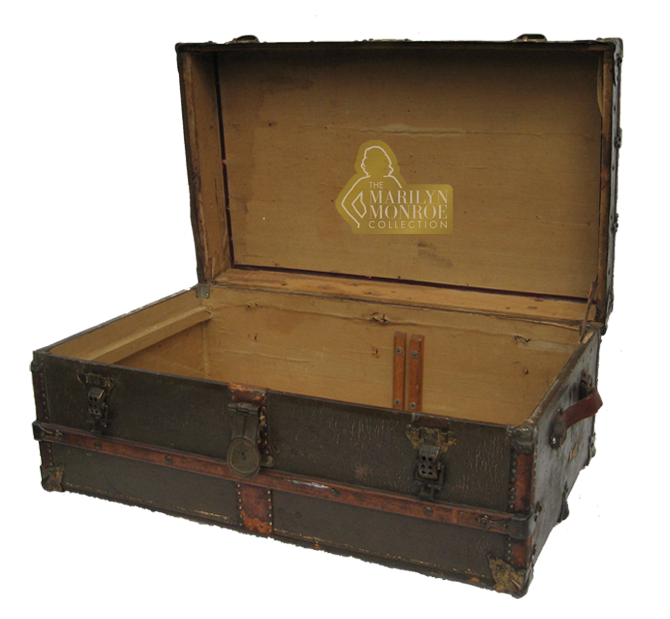
During the summer months of 1961, Ralph Roberts drove Marilyn and her half-sister Berniece Miracle to Roxbury, CT to retrieve the last of Marilyn’s personal possessions from the home she had shared with husband Arthur Miller. In this trunk, according to Roberts, Marilyn packed “her past.”
The Final Packing of Her Past at the Monroe-Miller Farm
In the summer of 1961, following her divorce from Arthur Miller, Marilyn Monroe returned one final time to the Connecticut home they had shared at the Monroe Miller farm in Roxbury. What remained there was not simply property, but fragments of her life.
Accompanied by Ralph Roberts and her half sister Berniece Miracle, Marilyn walked through the house and gathered the last of her personal belongings. These were not the glamorous objects of her public life, but deeply personal items. Books she had read. Childhood keepsakes she had preserved. Photographs, magazines, and private papers that had followed her through the many stages of her journey from Norma Jeane Baker to Marilyn Monroe.
Roberts later recalled that Marilyn carefully placed these possessions into a single trunk, describing it as containing what he called “her past.” From the memoirs of Ralph Roberts:
July 12, 1961
MM wanted one last trip to Roxbury to pick up various items, mainly kitchen stuff. Things she gave me included an aluminum orange squeezer, percolator, etc.
Also a footlocker of odds and ends from as she said “her past.” This footlocker contained various things – a Brownie from her Aunt Ana “only it’s black.” She had discussed with Richard Avedon his taking a picture of her taking a picture of him with it. He thought it an idea, but they never got around to it.
The trunk became a quiet act of closure.
Within it, Marilyn assembled objects that traced her life backward. Her earliest camera, given to her as a young girl by her Aunt Ana. Her childhood album of film stars. Books that reflected her intellectual curiosity and emotional depth. Vintage personal accessories and archival clippings documenting the public life she had lived.
These were not items selected for display. They were items selected for preservation.
They represented the private Marilyn Monroe.
The trunk marked the end of her marriage to Arthur Miller, but more profoundly, it marked the final separation between Marilyn Monroe and the life she had lived before. It contained objects spanning decades, from her childhood through her rise to international fame, assembled together at a moment when she was once again redefining herself.
Today, the surviving contents of Marilyn Monroe’s trunk remain among the most intimate artifacts in The Marilyn Monroe Collection. Each object carries with it not only its individual history, but its place within this singular moment when Marilyn gathered the physical remnants of her past and carried them forward into the final chapter of her life.
The trunk and its contents stand as a rare and deeply personal record of Marilyn Monroe’s journey, preserved exactly as she left it.
View Surviving Artifacts from Marilyn Monroe’s Trunk that are Part of The Marilyn Monroe Collection Today
- Marilyn’s first Kodak Brownie camera
- Marilyn’s personal film and gossip magazine collection
- Marilyn’s childhood Album of Film Stars
- Marilyn’s childhood Film History Book
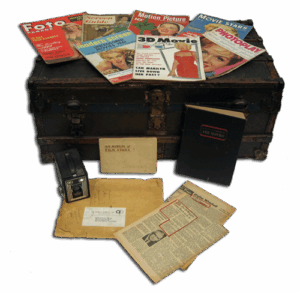
The 1995 Christie’s Auction
Among The First Marilyn Monroe Artifacts Ever Offered To The Public
Marilyn Monroe’s trunk and its contents hold an important place not only in her personal history, but in the history of Marilyn Monroe artifact preservation and collecting.
In 1995, the trunk and its contents were offered at auction by Christie’s East. This sale occurred four years before the landmark 1999 Christie’s auction, The Personal Property of Marilyn Monroe, which would later bring global attention to her personal belongings and establish the modern market for Marilyn Monroe artifacts.
At the time of the 1995 auction, very few authenticated personal possessions belonging directly to Marilyn Monroe had ever been made available to the public. The offering of her trunk and its contents represented one of the earliest opportunities for collectors, historians, and institutions to acquire objects that Marilyn Monroe had personally owned, used, and preserved.
Unlike later auctions, which included wardrobe, jewelry, and studio related material, the trunk contained deeply personal items that Marilyn herself had deliberately gathered and kept. These were not objects selected by studios, agents, or estate administrators. They were objects Marilyn chose to save.
The trunk and its contents offered a rare and intimate glimpse into Marilyn Monroe’s private life, containing childhood possessions, books, personal archives, and keepsakes that had accompanied her across decades.
Their appearance at Christie’s in 1995 marked the beginning of the modern era of Marilyn Monroe collecting.
Today, these artifacts stand among the earliest Marilyn Monroe personal effects ever to enter the public record through auction, predating the historic 1999 Christie’s sale that would later define her global auction legacy.
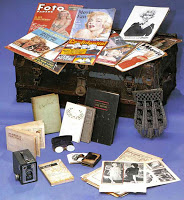
Film and Television Memorabilia Auction
December 18, 1995
Collector’s Note
Marilyn Monroe’s trunk and its contents were first offered at Christie’s in 1995, making them among the earliest authenticated personal belongings of Marilyn Monroe ever presented at public auction. This sale occurred four years before Christie’s landmark 1999 auction, The Personal Property of Marilyn Monroe, which brought international attention to her estate. As a result, the trunk and its contents represent some of the first Marilyn Monroe owned artifacts to enter the historical and collector record, preserving objects that Marilyn herself had chosen to keep.

Scott Fortner
Marilyn Monroe Collection
Founder & Owner

@mariylnmonroecollection 

TheMarilynMonroeCollection