
Marilyn Monroe’s Personal Annotated Envelope and a Black Beret Receipt, 1954
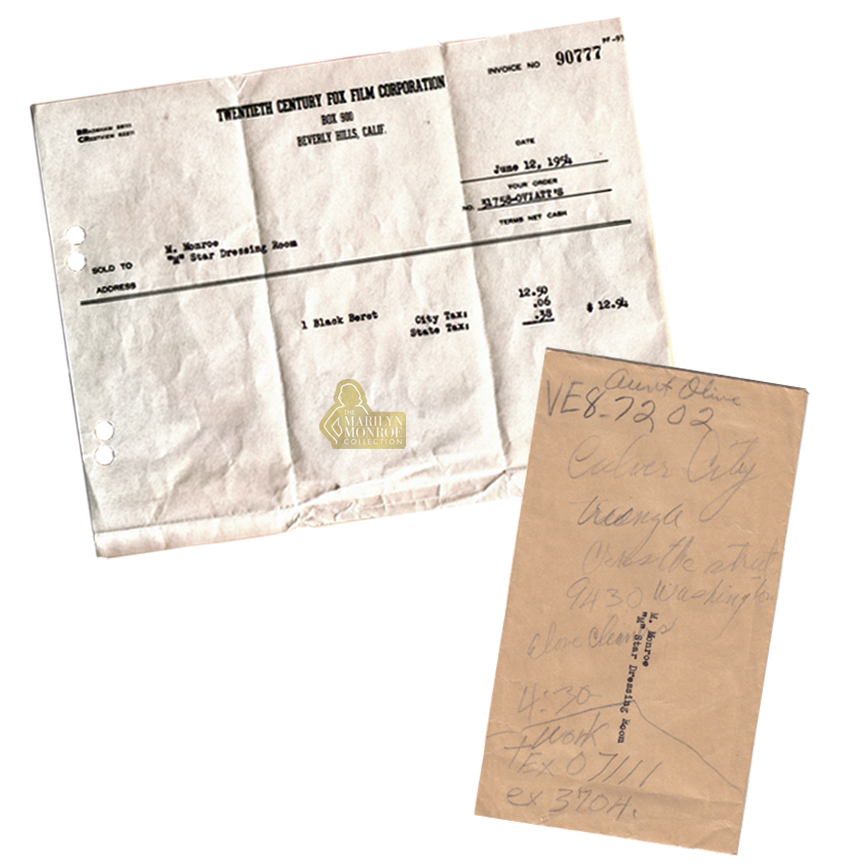
This personal envelope and enclosed receipt, dated June 12, 1954, were preserved among Marilyn Monroe’s private papers. Together, they document a moment from her daily life during her years under contract at Twentieth Century Fox.
The envelope bears a typewritten address reading “M. Monroe / ‘M’ Star Dressing Room,” identifying it as belonging to Marilyn during her time working on the Fox studio lot. In her own hand, Marilyn added a series of penciled notes that appear to record directions and contact information. The notes read in full:
“Aunt Olive / VE8-7202 / Culver City / triangle / cross the street / 9430 Washington / close cleaners / 4:30 / work / tex 07111 / ex 3704”
This reflects Marilyn’s habit of using available materials to record personal reminders, addresses, and telephone numbers, offering insight into the practical realities of her daily life.
Enclosed within the envelope is an original Twentieth Century Fox Film Corporation receipt, dated June 12, 1954. The receipt records the purchase of “1 Black Beret” by “M. Monroe” for a total of $12.94. The document confirms that the beret was acquired directly through the studio.
Family Reference
The envelope references “Aunt Olive,” most likely Olive Brunings, the wife of Marion Monroe, who was the brother of Marilyn’s mother, Gladys Baker. This reference illustrates Marilyn’s continued contact with extended family members during her adult life and reflects the intersection of her personal and professional worlds.
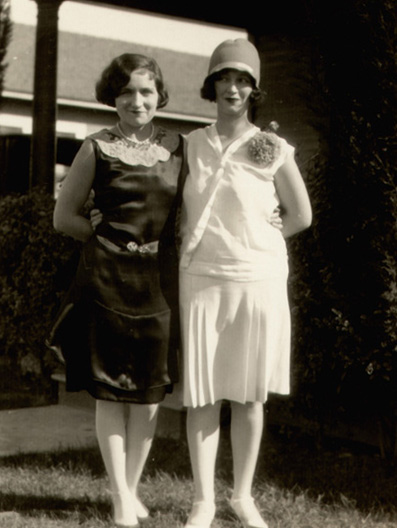
Olive on left, Gladys on right.
Historical Context
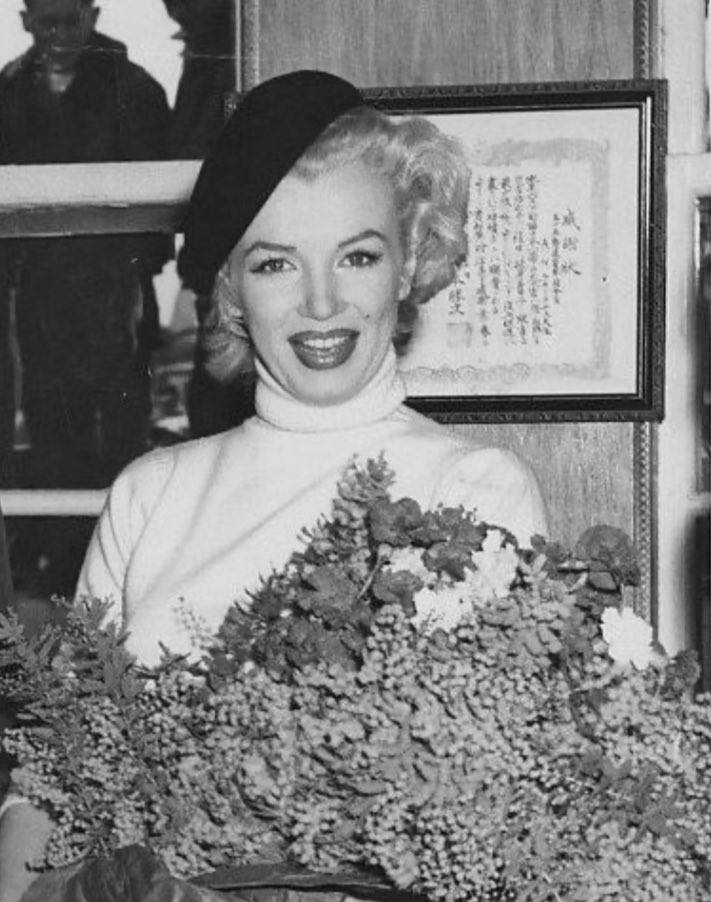
Black berets were a recurring element in Marilyn Monroe’s wardrobe, appearing both in her personal attire and in studio photography. During the early 1950s, berets were widely associated with European style and artistic identity, reflecting both fashion trends and the cultivated image of performers and creative figures.
By 1954, Marilyn had already established herself as one of Twentieth Century Fox’s most prominent stars. That year marked a period of transition and increasing independence in her career, including her temporary relocation to New York and the founding of her own production company the following year.
Artifacts such as this receipt and envelope provide documentary evidence of her working relationship with the studio and the everyday administrative details that accompanied her professional life.
Collector’s Note
As a collector, I find documents like this especially useful. This envelope and receipt exemplify the types of ordinary records that Marilyn Monroe retained among her personal files. While modest in appearance, such items offer valuable primary evidence of her daily routines, studio interactions, and personal habits.
The presence of Marilyn’s handwritten notes transforms the envelope from a simple artifact into a personal document. Together, the envelope and receipt document a specific purchase made during a pivotal period in her career, providing tangible evidence of her presence within the Twentieth Century Fox studio system and offering insight into the lived experience behind her public image.

Scott Fortner
Marilyn Monroe Collection
Founder & Owner

@mariylnmonroecollection 

TheMarilynMonroeCollection